

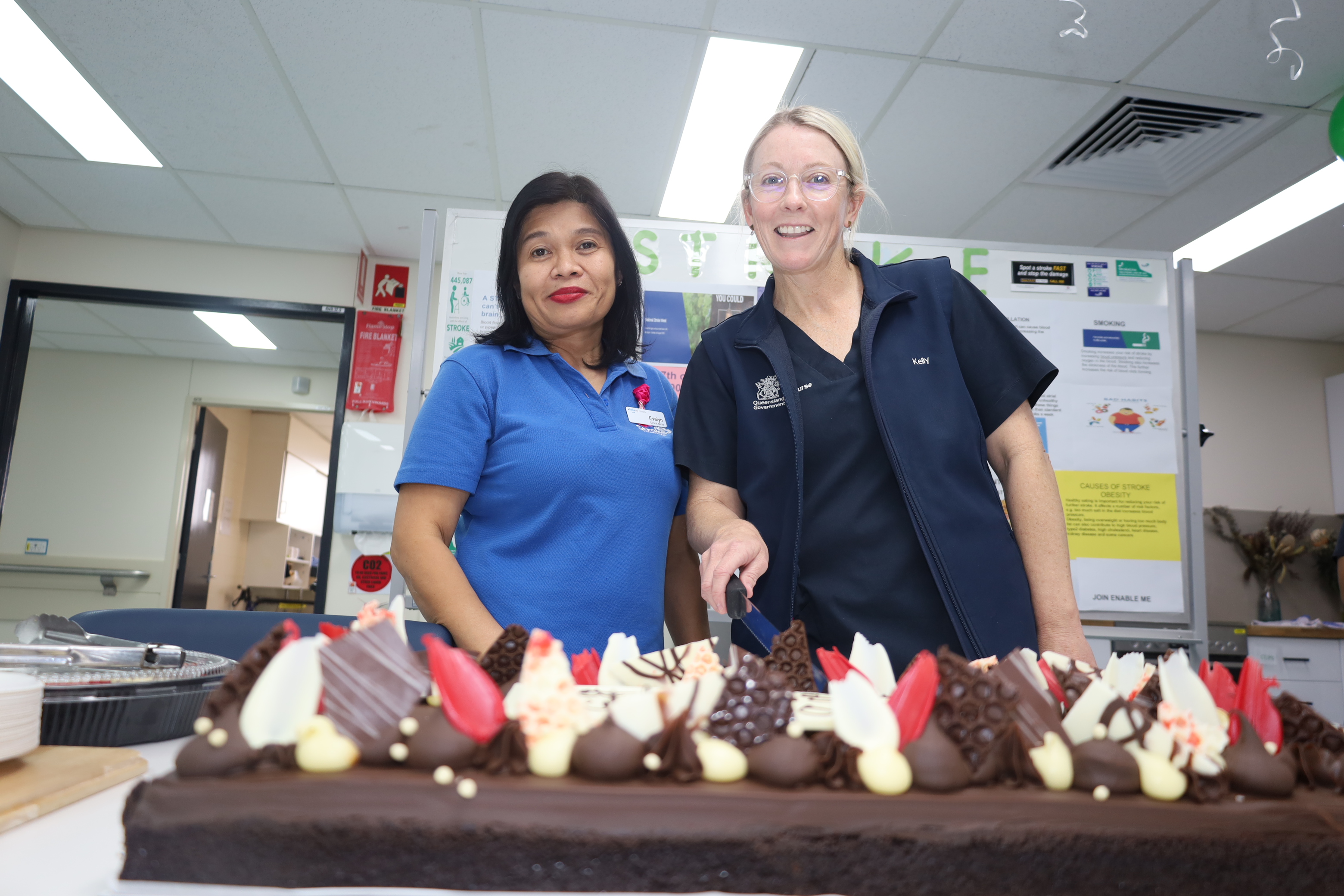
Grant winner Kelly Rose is pictured right with a colleague. Image courtesy of Metro South Health.
Physical impediments, high workload, and busy hospital environments can often prevent nurses and patients from forming meaningful personal connections during ward care.
To improve this, Nurse Unit Manager Kelly Rose proposed the Workstations on Wheels (WOWs) initiative to strengthen nurse-patient relationships and reduce barriers to meaningful bedside engagement.
Funded by the donors and supporters of the QEII Hospital Fund, the QEII Jubilee Hospital Fund Grants awarded one-off funding to selected staff-led projects that spark impactful changes for the community.
The grant was instrumental in supporting the implementation of the Dementia Australia VR training, which was a significant enabler of this project. The immersive experience provided staff with a greater understanding of the lived experience of dementia patients and enabled them to respond more appropriately to individual patient needs, such as by identifying triggers and implementing strategies earlier.
It was through the training that the team identified WOWs as a physical barrier to nurse-patent interactions, particularly following morning-handover sessions, observations and medication rounds.
The team then decided to implement a practice of removing WOWs from patient rooms during a dedicated two-hour period each morning, which allowed nurses to remain by patients’ bedside, respond and recognise patient needs and risks in real-time and provide more hands-on care.
One such risk from the lack of nurse-patient engagement is falling. The Australian Commission for Safety and Quality in Health Care defines a fall as when someone slips, trips, loses balance and rolls out of bed, which may be witnessed or unwitnessed.
This change saw significant outcomes for patient care and improvements in nurse-patient relationships.
“Patient falls reduced from approximately 15 per month to three per month, representing an estimated saving of 76 nursing hours per month associated with post-fall observations and management,” Ms Rose said.
“We also observed a reduction in occupational violence, call-bell usage and challenging behaviours, with patients reporting greater reassurance from having staff more visible and accessible. This initiative has seen improved staff confidence in supporting patients holistically and managing dementia-related behaviour, enabling nurses to provide compassionate care in a
calm and respectful environment."
For healthcare staff, it is the strong support of the QEII Hospital Fund and its donors that make it possible for their ideas to come to fruition.
You can contribute to projects like these for healthcare staff and patients by making the QEII Hospital Fund your place to give by donating here.
To improve this, Nurse Unit Manager Kelly Rose proposed the Workstations on Wheels (WOWs) initiative to strengthen nurse-patient relationships and reduce barriers to meaningful bedside engagement.
Funded by the donors and supporters of the QEII Hospital Fund, the QEII Jubilee Hospital Fund Grants awarded one-off funding to selected staff-led projects that spark impactful changes for the community.
The grant was instrumental in supporting the implementation of the Dementia Australia VR training, which was a significant enabler of this project. The immersive experience provided staff with a greater understanding of the lived experience of dementia patients and enabled them to respond more appropriately to individual patient needs, such as by identifying triggers and implementing strategies earlier.
It was through the training that the team identified WOWs as a physical barrier to nurse-patent interactions, particularly following morning-handover sessions, observations and medication rounds.
The team then decided to implement a practice of removing WOWs from patient rooms during a dedicated two-hour period each morning, which allowed nurses to remain by patients’ bedside, respond and recognise patient needs and risks in real-time and provide more hands-on care.
One such risk from the lack of nurse-patient engagement is falling. The Australian Commission for Safety and Quality in Health Care defines a fall as when someone slips, trips, loses balance and rolls out of bed, which may be witnessed or unwitnessed.
This change saw significant outcomes for patient care and improvements in nurse-patient relationships.
“Patient falls reduced from approximately 15 per month to three per month, representing an estimated saving of 76 nursing hours per month associated with post-fall observations and management,” Ms Rose said.
“We also observed a reduction in occupational violence, call-bell usage and challenging behaviours, with patients reporting greater reassurance from having staff more visible and accessible. This initiative has seen improved staff confidence in supporting patients holistically and managing dementia-related behaviour, enabling nurses to provide compassionate care in a
calm and respectful environment."
For healthcare staff, it is the strong support of the QEII Hospital Fund and its donors that make it possible for their ideas to come to fruition.
You can contribute to projects like these for healthcare staff and patients by making the QEII Hospital Fund your place to give by donating here.

